
Training in Toyohari Acupuncture
Toyohari training is a post-qualification course for acupuncturists.
There are two levels of training in Toyohari – the Basic Training and the Advanced Course.
The Toyohari Basic Training is a 120-hour programme over ten weekends, spread across nine months. The Basic Programme runs in various places around the world according to demand.
Stephen Birch has created this helpful in-depth introduction to the practice. You can watch it in full using LINK.
Apply for the next Basic Course in the UK below
The Advanced Course: Upon completing the Basic Training and having practised Toyohari for two years, you can apply to join the Advanced Course. The Advanced Course takes place in Amsterdam over two years. It consists of four three-day weekends and also includes a research project.
About Toyohari
The Toyohari Association was founded in 1959, evolving out of earlier developments in Meridian Therapy in the 1930s and 1940s. The Toyohari Association began as an Association devoted to Japanese Meridian Therapy for blind students and practitioners. Today it includes both sighted and blind practitioners. Many of the senior instructors in the Association are blind and have considerable clinical experience.
Toyohari is taught in Japan as post-graduate training of 20 days over two years. Instruction is given through the highly organised, academic and hands-on clinical training methods of the senior members of the Association, utilising the “Kozato study method”. The European Branch, the EBTA has developed a training programme that follows the Tokyo based programme.
The late past President of the Association, Kodo Fukushima wrote a book available in English translation: “Meridian Therapy”, which is required reading for this programme. The book, along with some supplies, are included in the cost of the programme.
Graduation from this 120-hour programme entitles the graduate to join the Toyohari Association through the Toyohari United Kingdom (TUK) branch and become a registered Toyohari practitioner. At present, there are seven branches: Dutch, UK, German, Swiss, Spanish, Portuguese and Israeli. The principal purposes of the branches are to foster and improve clinical skills by providing ongoing study opportunities both in Branch study groups and study sessions with senior instructors in Japan and Europe. The European Branch of the Toyohari Association was established to provide the structure for these educational opportunities.
The Basic Course
Graduates will receive a certificate signed by EBTA and the Tokyo headquarters of the Association. They will then be able to join the Toyohari Association through one of the EBTA branches.
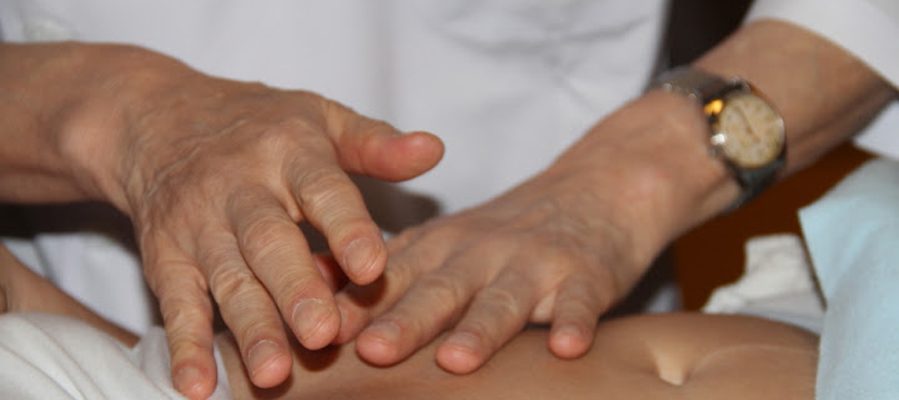
Principle among the techniques used in the Toyohari system are:
• Diagnosis: focusing especially on pulse and touch diagnosis;
• Treatment: very delicate supplementation technique; various draining techniques; harmonising technique (waho); “contact” needling techniques (sanshin); warming moxa (chinetsukyu); direct moxa (okyu); cupping (kyukaku); bloodletting (shiraku); specialised treatment of the neck and inguinal regions to relieve symptoms (naso & muno); specialised use of the extraordinary vessels (kikei);
specialised use of midday-midnight method (shigo).
Graduates will considerably improve their pulse and tactile diagnostic and assessment skills. They will also develop a greater sense of qi sensitivity by applying the needling techniques of the Association and will learn a range of methods specifically aimed at relieving symptoms.
Graduates will be able to join ongoing study groups by joining the Toyohari Association.
More than twenty international programmes have been taught in Europe, and this will be the fourth Toyohari programme to be taught in the UK. This programme will be taught by up to ten teachers: these include the two most senior teachers outside Japan: Stephen Birch and Junko Ida, seven other teachers, some of whom are UK based: Marian Fixler, Sue Pready, Joke Bik-Nowee, Miguel Cabrer Mir, Odile Marmier and Anja Stiehl. All have done extensive studies, also with Japanese teachers in Japan and Europe.
Acupuncture is often taught in more theoretical-lecture classes, however, this programme is very hands-on in its teaching approach. For each day of class there is a high student-teacher ratio with a minimum of two instructors complemented by other Toyohari members as assistants to help supervise the practical training. 60% of the programme will involve hands-on practice of the various methods and techniques.
The next UK Basic Course
To qualify for the program, you must have completed a degree-level training program in acupuncture.
To ensure maximum hands-on training, the number of participants will be limited to 24.
We expect the programme to fill quickly, so it is advised not to delay your application. Applications will be accepted on a first-come-first-served basis.
Dates
2026: September 5-6, October 3-4, November 7-8, 28-29
2027: January 9-10, February 6-7, March 6-7, April 3-4, May 8-9, June 5-6
Venue
The venue for the 2026/27 Basic Course is:
The College of Integrated Chinese Medicine
19 Castle Street, Reading RG1 7SB
Cost
The programme costs are:
£2400 if making a single payment
or £2600 if paying in instalments
PAYMENTS:
Deposit: A non-refundable deposit of £240, 10% of the cost, must be paid at the time of application to secure your place.
If paying in a single payment, the remaining £2160 needs to be paid by 1st June 2026
If paying in instalments, you can pay in two payments of £1180 each after the deposit. The second of which needs to be paid no later than 5th August 2026
Applications
If you’d like to join the next UK Basic Toyohari Training, please apply here: https://toyoharieurope.com/study-toyohari-in-europe/
Once your application has been processed, you will receive an email confirming your application along with relevant payment information. After receiving your deposit, you will receive an email confirming your place in the programme and other programme details.
Contact
For more information about the Basic Programme, please email Junko Ida
For details about Toyohari in the UK, please email Toyohari UK
 UK Toyohari Association